
How to Host an Intimate Wellness or Creative Retreat in the Hills of Kumaon
An invitation to slow down, reconnect with nature, and create meaningful experiences in the heart of the Himalayas.
There is a particular kind of quiet that exists in the mountains. It arrives with the first light filtering through pine trees, the distant sound of birds, the warmth of morning tea, and the unhurried rhythm of a day that asks very little of you.
In Kumaon, a beautiful region of Uttarakhand in the Indian Himalayas, this quiet becomes more than a backdrop. It becomes part of the experience.
As more people seek meaningful ways to step away from their routines, intimate wellness retreats, creative residencies, and slow-living gatherings are finding their place in the hills. These are not necessarily grand, meticulously choreographed events. Often, the most memorable ones are small gatherings of people who come together to practise yoga, write, paint, cook, exchange ideas, or simply spend time in a setting that allows them to breathe a little differently.
But what makes a mountain retreat truly special is not the number of activities on its itinerary. It is the feeling it leaves behind.
If you are considering hosting a wellness retreat, an intimate creative workshop, or a restorative weekend in Kumaon, here is how to approach it with intention.
1. Begin with a feeling, not an itinerary
Before choosing a venue or planning a schedule, ask yourself a simple question: How do I want people to feel when they leave?
Perhaps you want a small group of friends to experience a restorative weekend away from the city. Perhaps you are bringing together writers, artists, designers, or photographers for a few days of creative exploration. Or perhaps you envision a wellness gathering centred around yoga, meditation, mindful movement, and nourishing food.
Each of these experiences requires a different atmosphere.
A creative retreat may benefit from natural light, long tables, quiet corners, and spaces where ideas can develop without interruption. A wellness retreat may need an open terrace for morning yoga, comfortable indoor spaces for meditation, and an environment that encourages rest.
The most successful intimate retreats have a clear purpose without feeling overly structured.
Think of the experience as a story. There should be room for people to arrive, settle in, discover the surroundings, connect with one another, and eventually return home feeling that something has shifted, even if only a little.
2. Choose the right corner of Kumaon
Kumaon is not a single mountain landscape. It is a collection of distinct places, each with its own pace, character, and relationship with nature.
For retreat hosts, the choice of location can shape the entire experience.
Bhimtal: for a balance of nature and accessibility
Surrounded by forested hills and centred around a tranquil lake, Bhimtal offers a compelling setting for small-group wellness retreats and creative getaways. It allows guests to enjoy the quiet of the hills while retaining access to nearby cafés, local experiences, and outdoor activities.
A morning walk, an afternoon by the lake, or a conversation over tea overlooking the hills can become meaningful parts of a retreat without requiring an elaborate programme.
Mukteshwar and Sitla: for stillness and perspective
For those drawn to mountain views, forested surroundings, and a greater sense of seclusion, the Mukteshwar region offers a different rhythm. The landscape lends itself to contemplative writing, photography, mindful movement, and retreats where time outdoors is central to the experience.
Explore the official Mukteshwar destination guide for more information about the region.
Ramgarh: for a slower, more intimate atmosphere
Ramgarh is worth considering for gatherings centred around reading, writing, art, and thoughtful conversation. Its orchard landscapes and quieter mountain setting make it particularly appealing for people who want to spend more time observing, creating, and engaging with their surroundings.
The right location is ultimately the one that supports the intention of your gathering. A retreat does not need the most dramatic Himalayan panorama to be memorable. Sometimes, a forest-facing window and a comfortable place to sit are enough.
3. Find a space that allows people to gather naturally
A retreat venue is more than accommodation. It is where the experience unfolds.
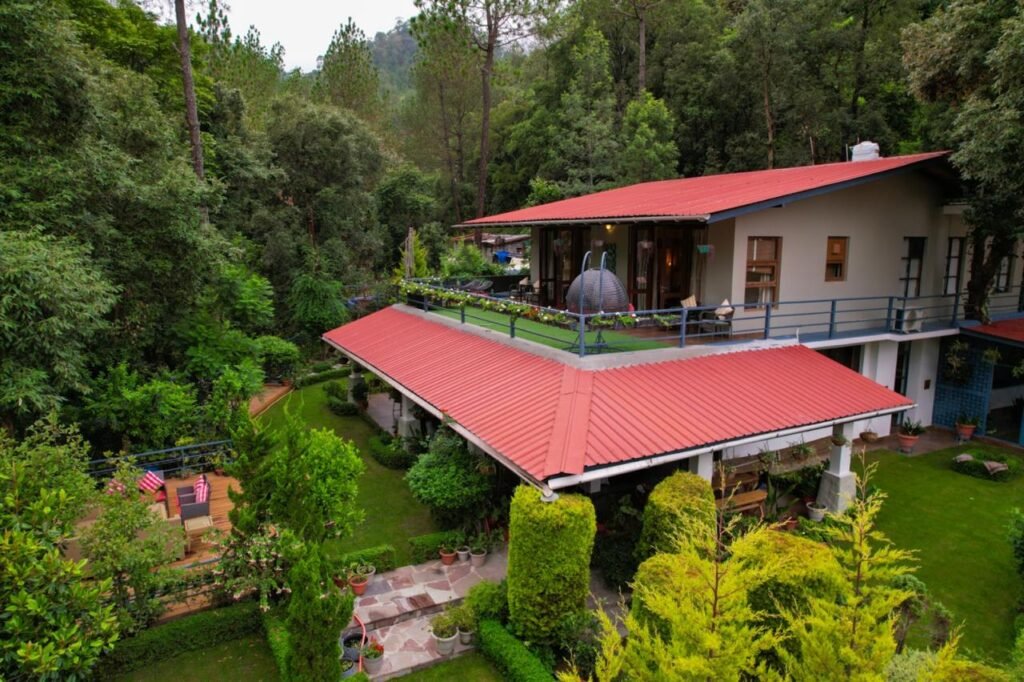
For a small group, a private villa or thoughtfully designed mountain home can offer a welcome alternative to a conventional hotel. Shared living areas encourage conversation, bedrooms provide privacy, and outdoor spaces allow the group to move between collective activities and individual moments of solitude.
When evaluating a private villa in Kumaon, consider the details that will influence the actual experience:
Shared spaces: Is there a comfortable living room, dining area, or terrace where the group can gather?
Natural light: Are there spaces suitable for journaling, painting, reading, or other creative work?
Outdoor access: Can guests practise gentle movement, enjoy their morning tea, or spend time in nature without having to travel?
Privacy: Will the group have enough space to interact without feeling crowded?
Practical comfort: Are heating, hot water, Wi-Fi, meals, housekeeping, and transport arrangements suitable for the group?
Hospitality support: Is there someone available to help coordinate meals, local arrangements, and the small details that make a stay feel effortless?
The aim is to find a space that feels welcoming rather than performative. A beautiful retreat setting should invite people to use it, not make them feel as though they need to preserve it.
For inspiration, explore the Kahaya Homes collection of private villas in Kumaon, including Villa Sahana in Bhimtal and Villa Firefly in Sitla, Mukteshwar.
Different settings lend themselves to different experiences. The important thing is to choose a property that genuinely fits your group, its activities, and the atmosphere you hope to create.
4. Design a programme that leaves room to breathe
One of the most common mistakes in retreat planning is trying to make every hour meaningful.
A tightly packed schedule can reproduce the very feeling of urgency that guests travelled to escape. In the mountains, there is value in leaving time unassigned.
A thoughtful three-day retreat might look something like this:
Day One: Arrival and settling in
Keep the first afternoon light. Welcome guests with tea, allow them time to unpack, and let the group become familiar with the surroundings. A shared dinner and an informal conversation about the days ahead can establish a sense of connection without forcing it.
Day Two: Practice, exploration, and creation
Begin with an optional morning yoga or meditation session, followed by breakfast. Reserve the late morning for a writing workshop, art session, guided reflection, or another activity connected to the retreat’s purpose.
After lunch, leave space for a forest walk, independent creative work, reading, or simply doing nothing. The evening might bring everyone together around a shared meal, a conversation, or a small creative exercise.
Day Three: Reflection and a gentle close
Start slowly. Allow guests time to journal, revisit their work, or take a final walk. A closing circle can give everyone an opportunity to reflect on what they experienced before departing.
The schedule should be a framework, not an obligation. Some guests will want to participate in everything; others may find their most valuable moments in the spaces between activities.
A good retreat makes room for both.
5. Bring wellness back to its simplest forms
Wellness does not always require a specialised treatment, a strict routine, or a carefully branded experience.
In the Kumaon hills, it can be as simple as beginning the day outdoors, eating a nourishing breakfast, taking a walk without checking your phone, or spending a few minutes listening to the sounds of the forest.
If you are hosting a wellness retreat in Uttarakhand, consider activities that suit both your setting and the people attending:
Gentle yoga, stretching, or mindful movement.
Guided meditation or breath-awareness sessions led by a qualified practitioner.
Nature walks with time for observation rather than distance or speed.
Journaling, reflective writing, or quiet reading sessions.
Seasonal, locally inspired meals served without unnecessary formality.
Evening conversations, stargazing, or quiet time around an outdoor fire where permitted and safe.
These experiences need not be elaborate to be meaningful. What matters is the quality of attention they invite.
For broader inspiration on the state’s approach to wellness travel, the Uttarakhand Tourism wellness guide offers an overview of the region’s connection with nature, yoga, and restorative travel.
It is also important to set clear expectations. A wellness retreat can support rest and reflection, but it should not promise medical or therapeutic outcomes unless the relevant services are appropriately qualified and delivered.
6. Make creativity part of the landscape
The mountains have a way of changing how we pay attention. Colours appear differently in shifting light; familiar sounds become more noticeable; and an ordinary walk can offer a new perspective.
For creative retreat hosts, this makes Kumaon an especially rewarding setting.
A painting workshop could begin with participants observing the changing colours of the hills. A writing retreat might use the morning silence for free-writing exercises. A photography group could explore natural light, textures, architecture, and the everyday details of mountain life.
Other possibilities include:
A small reading circle with a shared selection of essays or poetry.
A sketching session inspired by local landscapes and everyday objects.
A collaborative journaling workshop.
A slow-living gathering focused on food, craft, and storytelling.
A creative residency that gives participants uninterrupted time to work on individual projects.
The key is to avoid turning the destination into nothing more than a photographic backdrop.
Encourage guests to observe respectfully, seek permission before photographing local residents, and engage with the place beyond its most recognisable views. The most meaningful creative work often comes from paying attention to what is already there.
7. Let food become a shared experience
Food can quietly define the atmosphere of a retreat.
Rather than approaching every meal as a formal dining event, think about how food can bring people together. A relaxed breakfast, seasonal fruit, tea in the afternoon, or a long dinner around one table can create a rhythm that feels both generous and unforced.
Where possible, explore locally inspired Kumaoni dishes and seasonal ingredients. Ask about dietary restrictions in advance, plan vegetarian and other suitable options according to the group, and communicate any additional meal arrangements clearly.
There is also value in simplicity. Not every meal needs a theme, and not every evening needs a special setup.
A thoughtfully prepared meal, enjoyed slowly and shared with good company, can become one of the most memorable parts of the entire stay.
8. Plan the practical details before guests arrive
A retreat may feel spontaneous to its participants, but a comfortable experience usually depends on careful planning behind the scenes.
Before confirming your gathering, establish a realistic budget, a clear participant limit, and a practical schedule. Confirm what the property includes, whether any workshop or event use requires prior approval, and whether the venue can accommodate your activities.
For a smoother experience, arrange the following in advance:
Travel: Share directions, approximate journey times, transport options, and a designated arrival contact.
Accommodation: Clarify room allocations, occupancy limits, privacy arrangements, and check-in and check-out times.
Meals: Collect dietary requirements and communicate the meal plan and any additional charges.
Activities: Confirm facilitators, materials, equipment, and indoor alternatives in case of rain or cold weather.
Communication: Send guests a simple itinerary, a packing list, emergency contact details, and any relevant house guidelines.
Budget: Account for accommodation, meals, facilitators, local transport, materials, contingency expenses, and applicable taxes.
Mountain travel also calls for flexibility. Weather, road conditions, and travel delays can affect plans, so allow sufficient arrival time and avoid making the experience dependent on a single outdoor activity.
If you are hosting a paid retreat, be transparent about what the participation fee covers and what is optional. Clarity before arrival creates trust and allows guests to relax once they are there.
9. Make the retreat respectful of its surroundings
The appeal of Kumaon lies partly in the natural and cultural character of its landscapes. Hosting a gathering here comes with a responsibility to treat that setting thoughtfully.
Keep group sizes appropriate for the property and its surroundings. Minimise disposable materials, avoid excessive noise, respect local customs, and use established trails when walking outdoors. Where possible, work with local guides, cooks, artisans, and other practitioners whose knowledge can deepen the experience.
Be mindful of water and energy use, especially in mountain communities where resources and infrastructure can be limited. Outdoor fires should only be arranged where explicitly permitted, with suitable precautions and attention to local conditions.
A retreat can also contribute to the local economy without turning every interaction into a commercial transaction. Supporting local businesses and learning from people who know the region are simple ways to make a visit more reciprocal.
The goal is not to make sustainability another item on the itinerary. It is to make considerate choices part of how the retreat is organised.
10. Let the experience feel personal, not produced
There is a temptation to make every retreat look a certain way: matching journals, elaborate tablescapes, coordinated outfits, and perfectly timed photographs.
There is nothing wrong with thoughtful aesthetics. But they should support the experience rather than become its purpose.
A truly intimate gathering is often remembered for smaller things: a conversation that continued long after dinner, an unexpected afternoon of rain, a painting someone finally found the courage to begin, or a morning when everyone chose to sit quietly with a cup of tea.
These moments cannot be entirely planned, and that is precisely what makes them valuable.
As a host, you can create the conditions for connection. You can choose the right setting, bring together people with a shared interest, provide thoughtful hospitality, and leave enough room for the unexpected.
After that, the experience belongs to the people who are part of it.
A different kind of getaway
Perhaps the most compelling reason to host an intimate wellness or creative retreat in Kumaon is that the region does not demand a particular way of experiencing it.
You can arrive with a carefully developed programme or with a simple idea. You can spend the days learning, making, walking, resting, or talking. You can fill the silence with conversation or let the landscape speak for itself.
The mountains offer a setting, but the gathering gives it meaning.
And when the time comes to leave, the measure of a successful retreat may have little to do with how much was accomplished. It may simply be that everyone returns to their everyday lives feeling more present, more connected, and a little more open to the world around them.
Sometimes, that is enough.
Planning your own mountain retreat?
If you are exploring private villas in Bhimtal, Sitla, Mukteshwar, or the wider Kumaon region for a small gathering, creative workshop, or restorative getaway, begin by identifying the setting and facilities your group needs.
Explore Kahaya Homes to discover mountain villas that may suit your plans, and choose a space that gives your gathering room to unfold naturally.
The best retreats are not the ones that fill every moment. They are the ones that make room for moments worth remembering.