Beyond Dal Makhani: A Foodie’s Guide to Authentic Kumaoni Cuisine & Chef-Curated Meals
When people talk about food in the mountains, the conversation usually begins with hot chai, Maggi, momos and perhaps a familiar North Indian meal waiting after a long day of driving. But spend a little more time in Kumaon and you quickly realise that there is an entirely different food culture hiding in plain sight. One that is quieter, more seasonal and far more closely connected to the land.
Kumaoni food does not try too hard to impress you. There are no elaborate gravies, no long list of spices and no need for a dish to look dramatic on the table. Much of it comes from what has traditionally been grown around the home, collected from the hills or bought from a nearby village market. Lentils, millets, local greens, potatoes, spices and herbs come together in ways that are simple but incredibly satisfying. It is the kind of food that makes more sense once you have spent a few days in the mountains.
And that is probably the best way to experience it – not as a cuisine you have come to tick off your list, but as part of the Kumaoni way of life.
What makes Kumaoni food different?
The first thing you notice about Kumaoni cooking is its simplicity. The cuisine has evolved around the landscape and the lifestyle of the people who have lived here for generations. Ingredients had to be practical, seasonal and locally available, which meant that cooking was less about creating something extravagant and more about making the most of what the hills had to offer.
This is where ingredients such as bhatt, madua, jambu and jakhiya become important. Bhatt, a local black soybean, is used in several traditional preparations and has a wonderfully earthy flavour. Madua, or finger millet, has long been a staple mountain grain. Jakhiya seeds are used for tempering and have a distinct nutty character, while jambu, a local herb, adds a subtle aroma to many dishes.
None of these ingredients may sound particularly glamorous on paper. But put them together in the hands of someone who understands the cuisine and they tell you a great deal about where you are.
Start with Aloo Ke Gutke
If there is one dish that almost every visitor should try, it is Aloo Ke Gutke. It sounds simple because it is potatoes cooked with local spices and tempered until they pick up that smoky, earthy flavour that goes so well with a mountain meal.
What makes it special is precisely what makes much of Kumaoni food special: there is nowhere for unnecessary ingredients to hide. Good potatoes, the right spices and a proper tempering are enough. Eat them with dal and rice, or alongside a Kumaoni roti, and you begin to understand why some of the region’s most loved dishes are also its simplest.
Then there is Bhatt Ki Churkani, another staple worth looking for. Made using black bhatt lentils, the dish is hearty and deeply comforting, particularly when the weather turns cold. It is the sort of food that feels completely natural after spending a day walking through pine forests or driving along winding mountain roads.
And then comes the chutney
Ask someone from Kumaon about the food they miss when they are away, and there is a good chance chutney will enter the conversation.
Bhaang Ki Chutney is perhaps the most famous. Despite the name, this traditional chutney is made using hemp seeds rather than anything intoxicating. The seeds are ground with spices and other ingredients to create something nutty, sharp and wonderfully aromatic.
It is often served in a small bowl alongside the main meal, but don’t underestimate it. A spoonful can completely change the flavour of rice, potatoes or a simple dal. There is something particularly satisfying about these small accompaniments in mountain cuisine they may occupy very little space on the plate, but they bring a surprising amount of personality to it.
Kumaoni food changes with the season
One of the reasons it is difficult to describe Kumaoni cuisine through a fixed menu is that the food itself changes with the seasons.
The ingredients available in a Kumaoni kitchen in summer will not necessarily be the same in winter. Seasonal greens, vegetables, fruits and herbs naturally find their way into everyday cooking, while colder months call for food that is warmer and more filling.
This seasonality is something modern restaurants often try to recreate, but in Kumaon it isn’t a trend. It is simply how the food has always worked.
A meal might therefore be slightly different from what you expected. You might arrive looking for a particular dish and instead be offered something made with a vegetable that has just come into season. That is not a compromise. In many ways, that is the more authentic experience.
The comfort of Ras-Bhaat
There are certain dishes that make sense immediately when you eat them in the place they come from. Ras-Bhaat is one of them.
A traditional combination of lentils and a flavourful broth served with rice, it is the kind of meal that feels particularly appropriate in the hills. It is warm, filling and uncomplicated, and on a cold evening it can be exactly what you want after a long day outdoors.
Pair it with local vegetables, Aloo Ke Gutke and a sharp chutney, and suddenly you have a meal that feels less like something prepared for tourists and more like something that belongs to the house.
From a local kitchen to a chef-curated table
There is an interesting shift happening in mountain hospitality today. Travellers are no longer looking only for a beautiful room and a good view. Increasingly, they want to know what the place tastes like too.
That does not mean turning every mountain meal into a tasting menu. In fact, doing too much can sometimes take away from the experience. A good chef-curated Kumaoni meal should retain the warmth and familiarity of home cooking while paying attention to quality, presentation and the preferences of the people sitting at the table.
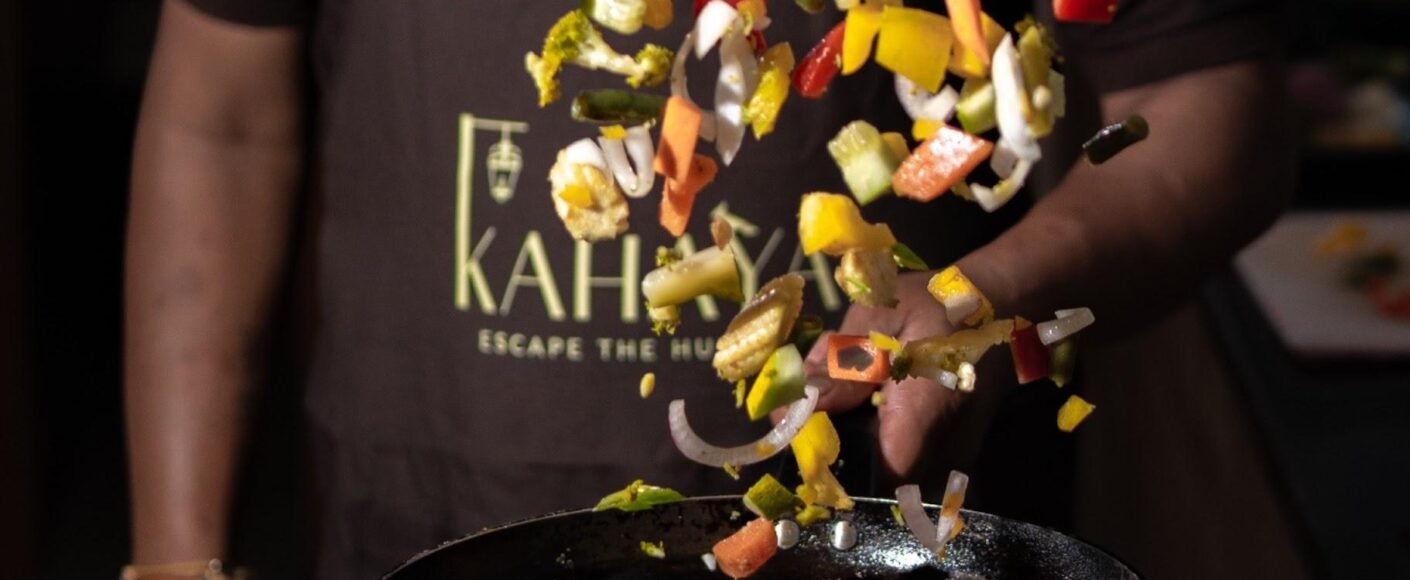
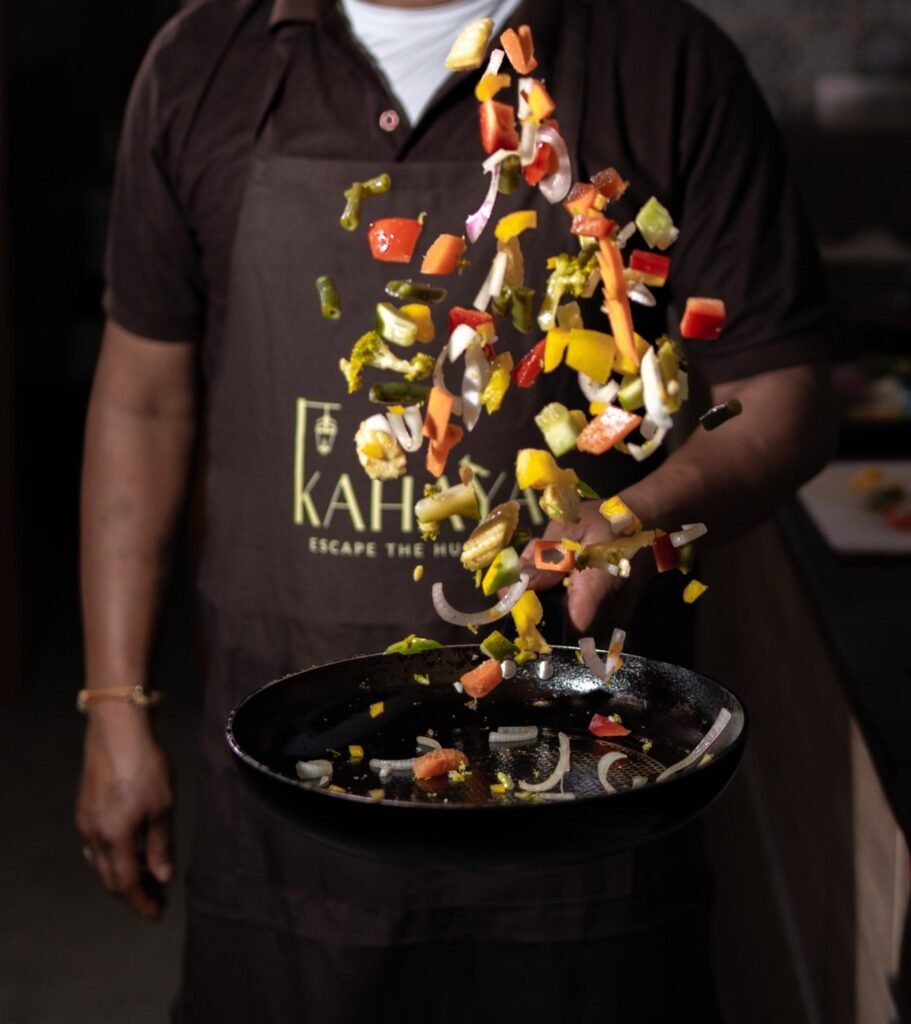
At Kahaya Homes, this approach fits naturally into the experience of staying in Kumaon. The idea is not to serve food simply because it sounds regional on a menu. It is about creating meals that feel connected to the destination – using local influences, seasonal produce and traditional flavours while giving guests the comfort and care expected from a thoughtfully run mountain home.
Depending on the season and what is available locally, a meal can move from a simple Kumaoni breakfast to a leisurely lunch and eventually a more intimate dinner. Sometimes the best part is not knowing exactly what will arrive on the table.
Food tastes different when you know where it comes from
Perhaps that is what makes eating in Kumaon so memorable.
You are not just eating another regional Indian meal. You are eating food shaped by altitude, weather, agriculture and generations of local knowledge. You begin to notice the ingredients differently. The millet is no longer just millet. The lentils are not simply another dal. Even a bowl of potatoes can tell you something about the place.
And when that food is eaten slowly, with the mountains outside the window and nowhere else you need to be, the experience becomes much more than dining.
It becomes part of the stay.
Beyond the Usual Mountain Meal
Kumaon has plenty to offer the traveller who is willing to look beyond the familiar. The next time you find yourself in the hills, skip the predictable dinner once and ask what is local, what is seasonal and what the kitchen would make for someone who genuinely wanted to experience Kumaoni food. You may end up with Bhatt Ki Churkani, Aloo Ke Gutke, Bhaang Ki Chutney, a bowl of Ras-Bhaat, some seasonal greens and perhaps a traditional sweet you had never heard of before.
And somewhere between the first bite and the last cup of chai, you may realise that the food was never just an addition to the mountain experience. It was the experience. This is the kind of experience we try to bring to the table at Kahaya homes – not simply serving a meal, but giving you a chance to discover Kumaon through its flavours, ingredients and traditions. Depending on the season and your preferences, our chef-curated meals are designed to make the food feel as much a part of your stay as the mountains outside your window.